
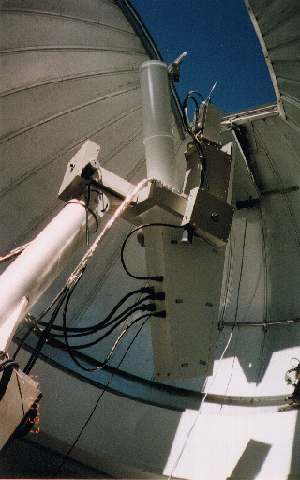
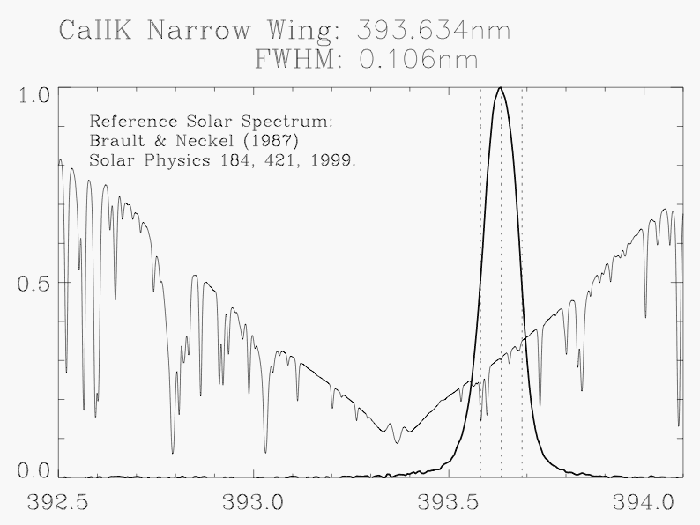
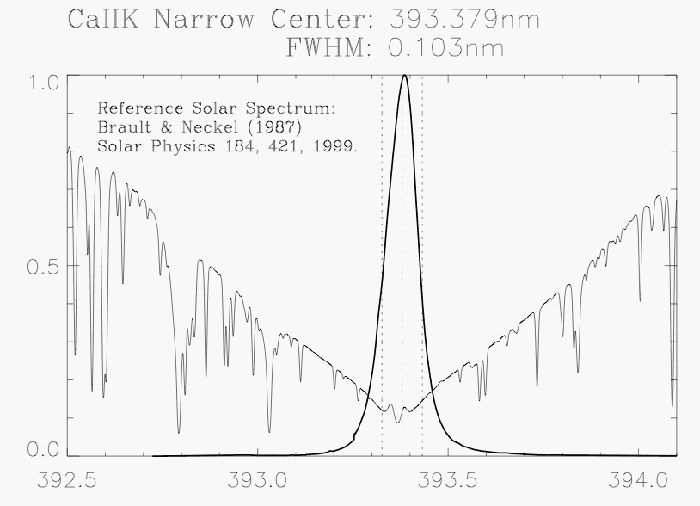
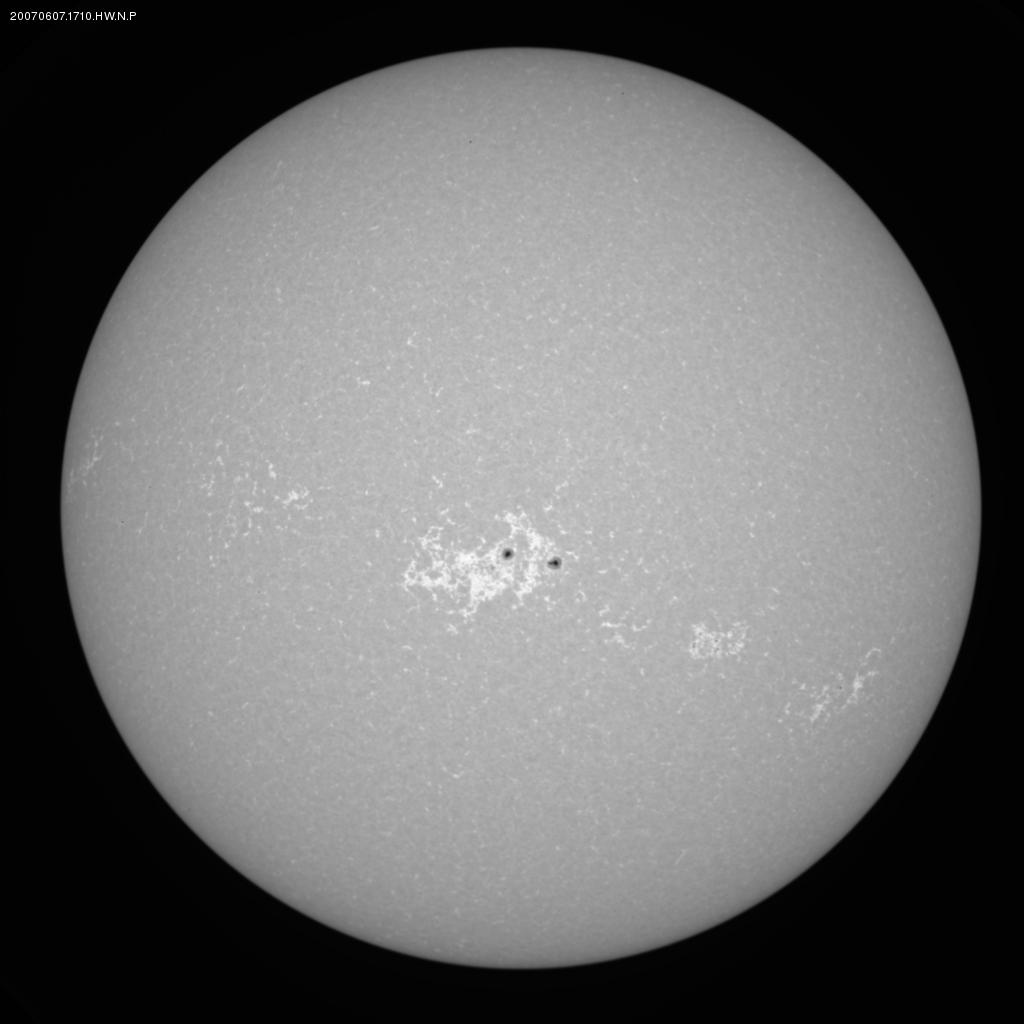
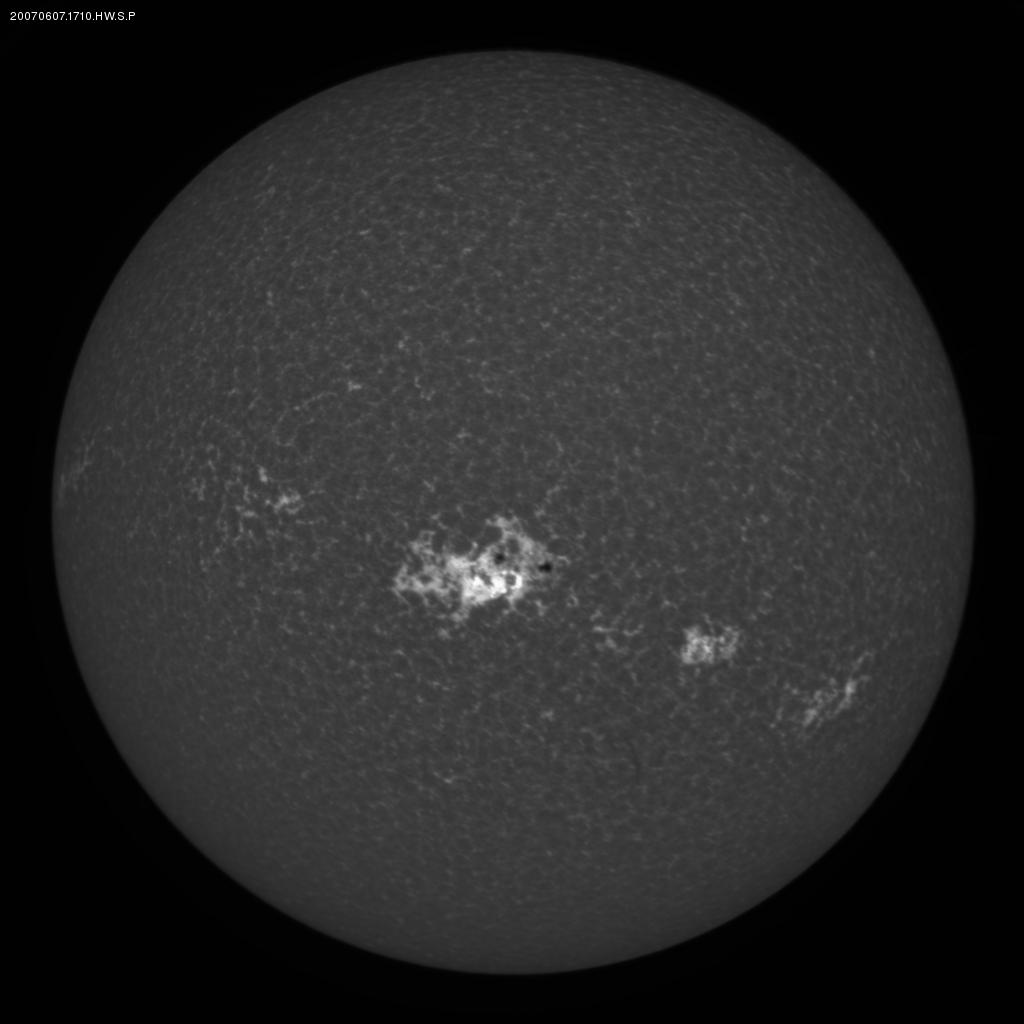
The Precision Solar Photometric Telescope (PSPT), operated at the Mauna Loa Solar Observatory (MLSO) in Hawaii, was a 15-cm refracting telescope designed for photometric imaging of the Sun. An unprecedented 0.1% pixel-to-pixel relative photometric precision was achieved by combining a telescope design which minimized scattered light with careful post-processing that facilitated very accurate measurement and removal of detector gain variations. PSPT acquired full-disk solar images on a 2048 x 2048 CCD array (~1"/pixel) in three wavelength bands: blue continuum (409.412nm, FWHM 0.267nm), red continuum (607.095nm, FWHM 0.458nm), CaII K (393.415nm, FWHM 0.273nm), CaII K Narrow Band Wing (NBW) (393.6nm, FWHM 0.1nm) , and CaII K Narrow Band Core (NBC) (393.4nm, FWHM 0.1nm).
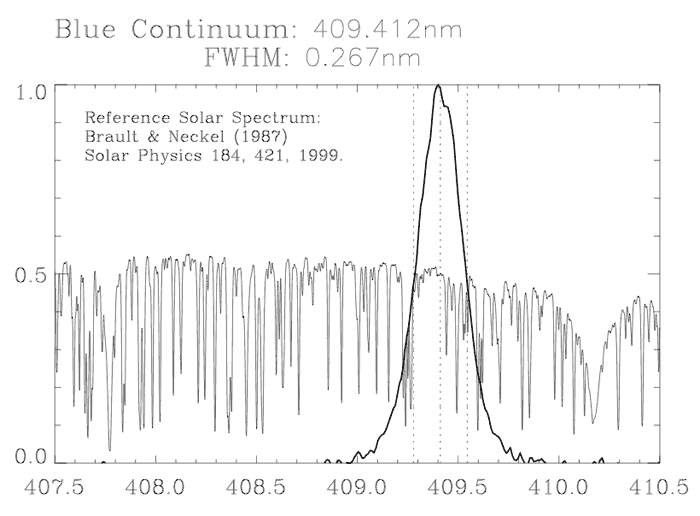
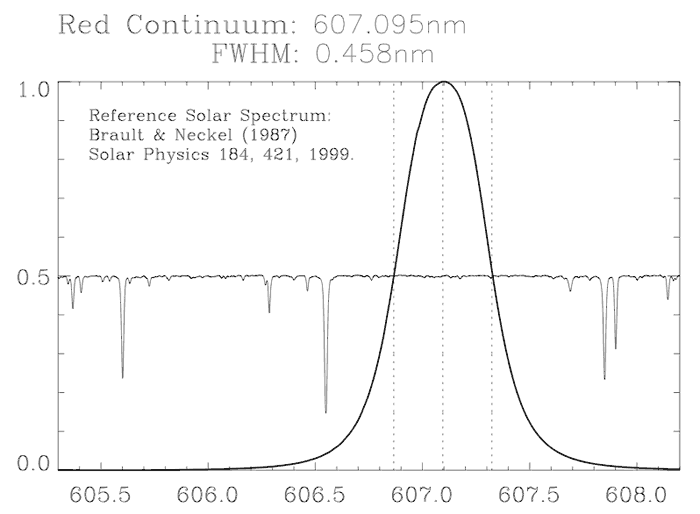
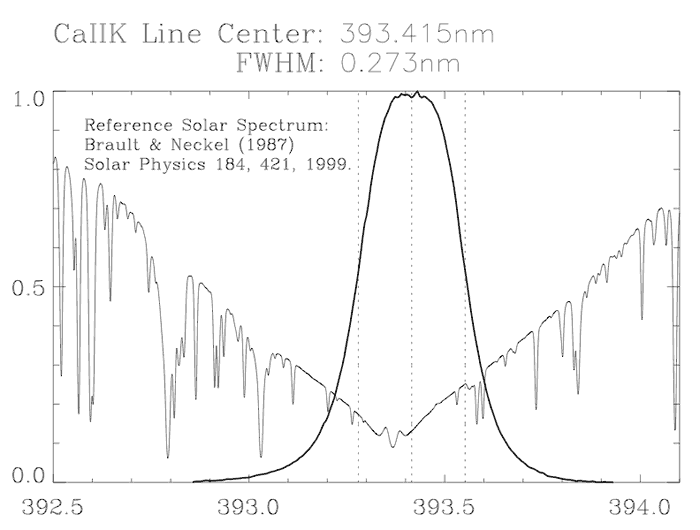
PSPT data processing employed a center to limb calculation (values in the image headers) that yields extremely flat contrast images. Solar Radiation Physical Modeling (SRPM) image masks were processed in addition to the above image data. The SRPM image mask is based on a semi-empirical center-to-limb corrected thresholding scheme (Fontenla et al. 1999, ApJ 518, 480). The scheme (briefly described in mask image header) employs the red continuum images to isolate sunspot umbral and penumbral pixels and the CaIIK images to separate the facular (bright plage), plage, active network, network, and quiet Sun components. Pixel values in the mask are assigned as follows: off disk (0), quiet-sun (2), network (3), active network (4), plage (5), faculae (6), sunspot umbra (7), and sunspot penumbra (8). All pixels with cosine of the heliocentric angle (mu) less than 0.15 are arbitrarily labeled quiet Sun.
Details about the telescope and processing details can be found in Rast et al. 2008, ApJ 673, 1209 and references therein.
The data from 2005 to 2015 is uniform (no instrument or processing changes) while the pre-2005 is less reliably uniform. More information on the PSPT data is in the release notes (linked at the bottom of this page). Data for March 1998-June 2015 is available from the Laboratory for Atmospheric and Space Physics (LASP) at the University of Colorado, Boulder using the Downloads tab at the top of this page.
Download PSPT Final Release Notes
Instrument Scientist
Mark RastRepresentative Images from MLSO
| BLUE | RED | CaIIK | CaIIK NBW | CaIIK NBC | SRPM |
|---|---|---|---|---|---|
![20050702[1].1702.HW.B.P.rdc](images/20050702[1].1702.HW.B.P.rdc.jpg) |
![20050702[1].1702.HW.R.P.rdc](images/20050702[1].1702.HW.R.P.rdc.jpg) |
![20050702[1].1702.HW.K.P.rdc](images/20050702[1].1702.HW.K.P.rdc.jpg) |
 |
|  |
Samples
Sample FITS headerData Files
URL Query via LaTiS
Download PSPT images directly through URL query, or view text lists of selected images.
General query format:
https://lasp.colorado.edu/pspt/latis/dap/image_directory.output?time>=time0&time<=time1&filter=filter
image_directory:
'pspt_files' (FITS images)
'pspt_image_files' (jpg images)
'pspt_thumbnail_files' (thumbnail jpg images)
output:
'asc' (ASCII file displayed in browser window)
'txt' (text file displayed in browser window)
'zip' (download that will automatically start in the browser and download images to local disk in year/month/day/filter directory format)
time0 & time1:
'YYYY-MM-DD' dates, i.e. 2004-01-01
filter:
single letter for one filter (i.e., 'R', 'B', 'K', 'N', 'S') or set of multiple letters for multiple filters (i.e., '{B,K}')
Example queries:
https://lasp.colorado.edu/pspt/latis/dap/pspt_image_files.asc?time>=2004-01-01&time<=2004-01-31&filter=B
Display an ASCII list of all blue jpg images available between January 1-31, 2004 (inclusive) in the browser window.
https://lasp.colorado.edu/pspt/latis/dap/pspt_files.zip?time>=2010-01-01&time<2010-05-31&filter={K,R}
Download all red & calcium FITS images available between January 1-May 31, 2010 (inclusive).