Charles A. Barth Scholarship in Space Research

Charles A. Barth Scholarship in Space Research

Charles A. Barth Scholarship for undergraduate space research

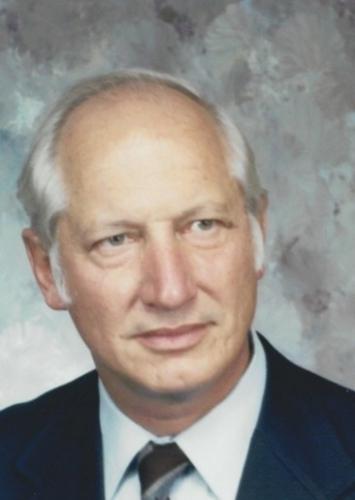
Dr. Charles A. Barth received his Ph.D. from UCLA, and was a National Science Foundation Postdoctoral Fellow at the University of Bonn from 1958-59. Before coming to LASP, he worked as a Research Physicist at the Jet Propulsion Laboratory from 1959 to 1965. Dr. Barth was the Director of LASP from 1965 to 1992. He was an Associate Professor from 1965 to 1967 and a Professor in the Department of Astrophysical and Planetary Sciences from 1967 to 2002. Dr. Barth was a Professor Emeritus at LASP and in the Department of Astrophysical and Planetary Sciences at CU Boulder from 2002 through 2014.

Between 1962 and 2002, Dr. Barth served as Principal Investigator for eleven missions and experiments. Among these were Mariner 5, Mariner 6 and 7, Mariner 9, OGO-2, 4, 5, and 6, Atmosphere Explorer-C and D, the Solar Mesosphere Explorer, and the Student Nitric Oxide Experiment. Under his guidance, LASP science instruments journeyed to every planet in the solar system. 

In addition to his long and productive career, Dr. Barth left a lasting legacy through his teaching and mentoring. He generously shared his knowledge and passion with students and was committed to hands-on education and training. He inspired countless undergraduates studying science and engineering. Dr. Barth prioritized involving as many students as possible in his space research and NASA missions. LASP continues to honor Dr. Barth’s legacy by continuing to prioritize student involvement.

In 2013, CU Boulder established the Charles A Barth Scholarship in Space Research to honor his legacy. This scholarship fund continues to support undergraduate students; you can make a donation using the link below.

Dr. Barth passed away on October 14, 2014, at the age of 84.

How to Apply

The Charles A. Barth Scholarship in Space Research will contribute to tuition costs for several LASP undergraduate students enrolled at the University of Colorado Boulder with focused studies related to space research. Awards are typically on the order of  ~$1300 per student.

To apply: Applicants should submit a 300-word statement of their proposed research project, an up-to-date academic transcript, and a one-page CV that includes any previous research experience and lists the LASP researcher who would supervise the applicant’s work, plus an additional potential reference. The application deadline is in May.

Please send a single .pdf file to BarthScholarship@lasp.colorado.edu.

2025 Award Recipients

Jaden Fitzpatrick

Jaden Fitzpatrick (Astrophysical & Planetary Sciences’26) is working with LASP research associate Naomi Maruyama. They are investigating the erosion and refilling of the Earth’s plasmasphere after a solar storm through model simulations of plasma and neutral atoms. “When I joined LASP a year ago, I never would have imagined the kind of researcher I have grown into today. I sincerely appreciate the support of my advisor and others at LASP, and I hope to make you all proud as I use the tools you have equipped me with to pursue a career in research,” said Fitzpatrick.

Maya Nussbaumer

Maya Nussbaumer (Astrophysics and Molecular, Cellular & Developmental Biology/minor in Biochemistry’26) is working with Paul Hayne, LASP research associate and CU Boulder assistant professor of astrophysical and planetary sciences. They are using Galileo NIMS data of Europa’s surface composition to determine relative rates of darkening between the trailing and leading hemisphere, as well as the age of Pwyll crater. “I am so grateful for the experience of working at LASP. I have learned so much more by doing research than I would have just by getting my degree,” said Nussbaumer.

Grace Fuller

Grace Fuller (Astrophysics’26) is working with LASP senior researcher Fran Bagenal. They are using data from NASA’s Juno mission to investigate and further characterize the relationship between solar wind dynamic pressure and the shape and size of Jovian magnetospheric boundaries. “The opportunity to work at LASP has been invaluable. I am so incredibly grateful to my mentor, Fran, and my group for all their support, and I have grown so much as a student and a researcher during my time here,” said Fuller

John Denton

John Denton (Astrophysics and Anthropology/minor in Space Physics’26) is working with both LASP research associate and CU Boulder professor David Brain and LASP research associate and CU Boulder assistant professor Lauren Blum. They are using mass spectroscopy data from the STATIC instrument on the MAVEN spacecraft to survey the minor ion species escaping from the Martian bow shock. In addition, they are modelling a Geosynchronous Transfer Orbit with and without an electrondynamic satellite tether as a deorbit option. “Working at LASP has given me hope for my career in the space industry. I suffer from impostor syndrome but being able to produce real scientific results at a space research institution has given me confidence in myself and my abilities. Thank you to my amazing mentors providing constant guidance and support along the way,” said Denton.

Amelia Gandhi

Amelia Gandhi (Astrophysics and Geophysics/certificate in Native American Studies’26) is working with LASP researcher and CU Boulder professor Nick Schneider. They are categorizing and describing second to minute-scale variations in Martian aurora to then determine potential drivers behind them, ultimately helping us better understand how Mars’ magnetosphere behaves at these short timescales. “I’m so grateful to have the opportunity to work with such a talented team at LASP. The support and trust my team gives me not only teaches me how to be a good scientist, but also how to be a better person. I hope to carry all that LASP has given me forward into the future,” said Gandhi.

CJ O’Neill

CJ O’Neill (Aerospace Engineering Sciences/minor in Planetary Sciences’26) is working with LASP engineer Michael Bonnici. They are simulating spacecraft dynamics and attitude mechanics for the upcoming Emirates Mission to the Asteroid Belt (EMA) to determine solar array pointing attitude, describe instrumentation pointing accuracy, and verify orbit dynamics models. “My time at LASP will extend more than three out of four years of my undergraduate degree. This opportunity has not just added to my education but was as fundamental as the time spent in class. My mentors have supported me through key turning points in my life and will serve as role models for the rest of my career. I am incredibly grateful for everything LASP has given me,” said O’Neill.

2024 Award Recipients

Thomas Flint

Thomas Flint, Class of 2026, major in astrophysical and planetary sciences with a minor in applied math, is working with LASP research associate Mike Chaffin. They are investigating the formation of patchy proton aurora on Mars by comparing particle precipitation simulations with data from NASA’s Mars Atmosphere and Volatile EvolutioN (MAVEN) and Emirates Mars Mission (EMM) spacecraft.

Grace Shore and Margaret Landis

Grace Shore

Grace Shore, Class of 2025, major in astrophysics with a minor in atmospheric and oceanic sciences, is working with LASP research associate Margaret Landis. They are investigating the composition changes in the ice sheet at the north pole of Mars using data from the High Resolution Imaging Experiment (HiRISE) camera, which was developed by the University of Arizona’s Lunar and Planetary Laboratory for NASA’s Mars Reconnaissance Orbiter and is the highest-resolution orbital camera at Mars.

Gwyneth Lowry

Gwyneth Lowry

Gwyneth Lowry, Class of 2025, major in aerospace engineering sciences with a minor in computer science, is working with LASP research associate and CU Physics associate professor Sascha Kempf on understanding the quantitative capabilities of spacecraft impact ionization mass spectrometers such as LASP’s SUrface Dust Analyzer (SUDA), which will be onboard NASA’s Europa Clipper mission.

Delaney LeeBellows and David Malaspina

Delaney Lee-Bellows

Delaney Lee-Bellows, Class of 2025, double major in astrophysics and mathematics, is working with LASP research associate David Malaspina, who is also an assistant professor in CU’s Astrophysical & Planetary Sciences (APS) Department. They are using data from NASA’s Parker Solar Probe mission to investigate the spacecraft surface potential and its possible effects on instrument measurements.

Sydney Ciechanowicz and BrianHynek

Sydney Ciechanowicz

Sydney Ciechanowicz, Class of 2025, triple major in astrophysics, geology, and molecular, cellular, and developmental biology, with minors in biochemistry and chemistry, is working with LASP research associate and CU Boulder Geology Professor Brian Hynek. They are studying the effects of temperature and pH in a Martian analog hydrothermal system in Costa Rica to better understand the astrobiological potential in these extreme conditions.

Shelby Opp

Shelby Opp, Class of 2025, double major in astrophysics and geophysics, is working with LASP research associate and APS Professor David Brain. They are searching for magnetized craters on Mars surface using data from NASA’s MAVEN mission to characterize the relationship between magnetic crustal field strength and Mars topography.

2023 Award Recipients

Lauren Christenson

Lauren Christenson, Class of 2025, major in aerospace engineering sciences with a minor in atmospheric and oceanic sciences, is working with LASP researcher Naomi Maruyama on investigating space weather impacts on the Earth’s upper atmosphere caused by solar storms through simulation data of plasma and neutral atoms.

Thomas Corbett

Thomas Corbett, Class of 2025, major in physics, is working with LASP professional research associate John Fontanese and LASP research associate and CU Boulder professor Mihaly Horanyi. They are working in the Modeling Plasma, Atmospheres, and Cosmic Dust (IMPACT) laboratory, testing and calibrating spaceflight instruments such as the Europa SUrface Dust Analyzer (SUDA) aboard NASA’s Europa Clipper mission and the Interstellar Dust Experiment aboard (IDEX) NASA’s IMAP mission.

Troy Hesse

Troy Hesse, Class of 2024, double major in physics and astrophysics, is working with LASP research associate Laila Andersson.  They are using data from the Mars Atmosphere and Volatile EvolutioN (MAVEN) mission to study the possible drivers of composition change in the upper most atmosphere of the red planet.

Caroline Emery

Caroline Emery, Class of 2024, major in physics, is working with LASP research associate Michael Chaffin on Mars atmosphere escape processes including water loss by investigating the emission characteristics of the Lyman alpha hydrogen line.

Samantha Honan

Samantha Honan, Class of 2024, double major in aerospace engineering and astrophysics, is working with LASP research associate and CU Boulder professor Mark Rast. They are exploring the origin of sound waves that are typically used to study the interior structure and dynamics of the Sun.

2022 Award Recipients

Jay Cessna

Jay Cessna works with Dave Brain studying habitable words including investigating atmospheric escape of weakly magnetized planets.

Patricio Ramos

Patricio Ramos works with Lauren Blum on the Dual Aperture Relativistic Telescope (DART) instrument to measure the electron precipitation in Earth’s magnetosphere.

Shivank Chadda

Shivank Chadda works with David Malaspina studying interstellar dust properties from the WAVES electric field instrument on NASA’s Wind spacecraft.

Samuel Aberbook

Samuel Aberbook works with Paul Hayne studying Jupiter’s moon Europa to make model predictions of its surface and subsurface temperatures.

2021 Award Recipients

Josephine Johnson

Josephine Johnson works with Dave Brain and Robin Ramstad to study the magnetospheres of Mars and Venus.

Adrienne Pickerill

Adrienne Pickerill works with Nick Schneider to study and identify different types of aurora in Mars atmosphere.

Patrick McCreery

Patrick McCreery works with Mark Rast to study and identify solar acoustic modes using machine learning techniques.

2020 Award Recipients

Ethan Ayari

Ethan Ayari works with Mihaly Horanyi on visualizing ring currents around planetary magnetospheres

Ace Stratton

Ace Stratton works with Bruce Jakosky on the role of dust storms in the loss of water from Mars

Ben Johnston

Ben Johnston works with Nick Schneider to study solar energetic particle events triggered in the MAVEN-IUVS instrument in orbit around Mars
2014–2019 Award Recipients

2019

Tara Tomlinson

LASP advisor: Paul Hayne

2018

Rachel Zac Milby

LASP advisor: Nick Schneider

Carlos Eytan Gary Bicas

LASP advisor: Paul Hayne

2017

Parker Hinton

LASP advisor: Fran Bagenal

Rachel Lee McClure

LASP advisor: Mark Rast

2016

Skylar Shaver

LASP advisor: Laila Andersson

2015

Willow Reed

LASP advisor: Marty Snow

2014

Wren Suess

LASP advisor: Marty Snow