

MinXSS-2 commissioning complete
 Just 4 days, 9 hours after being launched, we have completed the commissioning for MinXSS-2. There are still some issues to resolve, but we are now running in science mode and have tuned our primary science instrument for solar observations. We’ve also of established communications (of course) with our existing ground station at LASP and with our new one in Fairbanks, Alaska. We’ve checked out all of the spacecraft health and safety onboard measurements to verify that things are running okay. We have updated both of the onboard clocks and loaded an ephemeris (aerospace lingo for a point in time and space that we know the spacecraft is in so that the onboard orbit propagator can predict its own orbit from then on). We then tuned the thresholds that our primary science instrument, an Amptek X123 silicon drift detector, uses for counting the number of x-ray photons entering the detector. You can see our crude first light plot in yesterday’s news post.
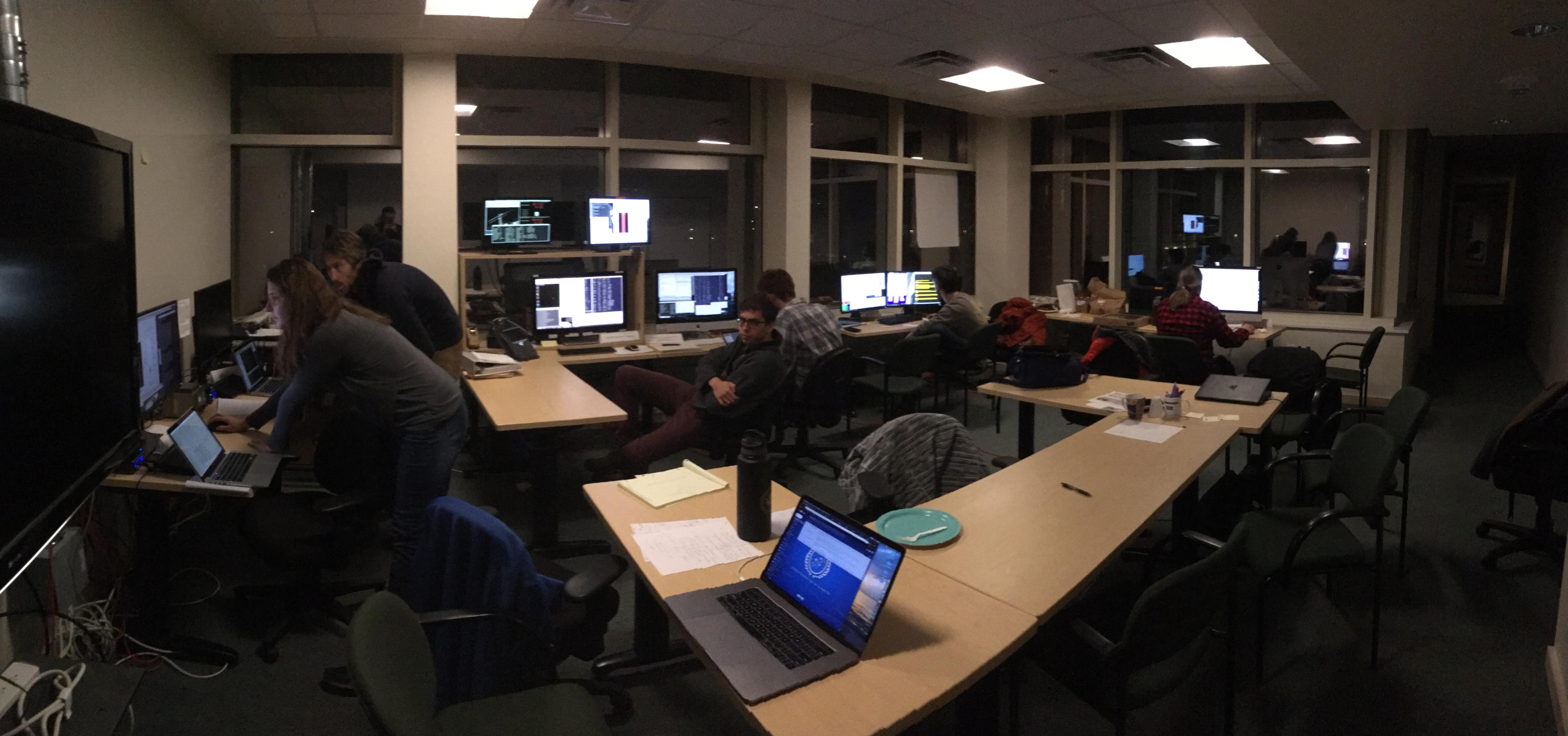
The photo above shows our new CubeSat operations room at LASP. From here, we control our UHF and S-band dishes on the roof and our UHF ground station in Alaska. During the day, we have an amazing view of the Flatiron Rocky Mountains in beautiful Boulder, Colorado.
It’s been an amazing week with a lot of long hours and hard work from all involved.

