Crucial links to life elsewhere in our galaxy
From the wispy, carbon dioxide-rich atmosphere on Mars to the fast-spinning, layered atmosphere on Jupiter, many bodies in our solar system have atmospheres. Each has unique characteristics that, as we see on Earth, may serve as a crucial link to life elsewhere in our galaxy.
Scientists at LASP study the atmospheres of each planet in our solar system, as well as those of some exoplanets, to better understand these bodies as well as our own atmosphere. Clouds are another area where we focus. We study models, as well as observations of clouds on several planets in the solar system and beyond, to understand the role they play in the evolution and maintenance of planetary atmospheres. LASP researchers are also investigating the atmosphere of the early Earth, which was strange enough to seem like another planet.
Ongoing projects include:
- Using data from the Mars Atmosphere and Volatile Evolution Mission (MAVEN)mission to understand how the Martian atmosphere changed so radically over time, from a thicker atmosphere to the thin one we see now
- Creating global climate models for Mars and Titan
- Studying the climate and chemistry of the early Earth’s atmosphere
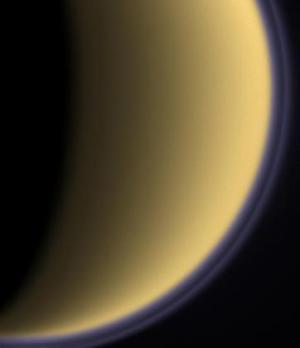
- Analyzing Cassini observations of the atmospheres of Titan and Saturn
- Investigating the atmosphere of Venus and planning for new missions there
- Understanding the atmosphere of Pluto